Embedding Restorative Justice in the Basque Country’s Coexistence Landscape
By Jesse Laurie
In the Basque Country, a range of restorative justice practices have emerged as powerful tools for facilitating coexistence[1]. In the aftermath of the decades of violence, the distinct absence of a formal transitional justice framework (i.e. a set of processes designed and enacted to address the legacy of mass violence or conflict) has left Basque society with the challenge of confronting cultural and institutional silence, preserving and constructing collective memory, and rebuilding social connections at the grassroots level. This article, drawing on research into how peacebuilding practitioners operate within the unique Basque context, looks at the impact and challenges of implementing different types of restorative justice practices in the Basque Country, and the vital contribution they continue to make to the broader peace and coexistence landscape[2].
The Basque Peacebuilding Landscape
In the Basque Country, the term ‘Basque Conflict’—often used in international spheres to refer to the years of ETA’s armed activity—makes little sense[3]. In a region that has seen different manifestations of war and violence span entire generations, there is no way of pinpointing the meaning of ‘the’ Basque conflict. During my time in the region, when explaining my reasons for being there, that I was researching reconciliation processes, the response usually came as: Reconciliation of what? Which conflict? The Spanish civil war? The systematic violence of the Francoist regime? ETA’s campaign of political violence? What about the violent response of the GAL (Grupos Antiterroristas de Liberación) and other paramilitary groups? Or indeed, the atrocities carried out by agents of the State? In the Basque Country, boundaries and timelines are blurred and contested. Where outsiders might interpret the ‘Basque Conflict’ as involving a distinct set of actors with clear start and end points, those embedded within it understand first-hand that drawing such clear lines is not so straightforward.
An additional challenge, both for me as a researcher, and for the practitioners I was working with, is the so-called ‘culture of silence’ in the region. The sense that “you never quite know who you’re talking to” keeps difficult conversations removed from daily social life, where many families silently harbour the scars of violence, or the memories of missing or murdered loved ones[4].
The Spanish democratic transition was underpinned by the Pact of Forgetting (El Pacto Del Olvido), the pervasive notion that moving peacefully into a new democratic era hinged on forgetting the atrocities committed in a very recent past. The pact laid the foundations for various legal instruments, most notably the Amnesty Law 46/1977 that granted impunity to those who participated in human rights violations during the civil war and the Francoist dictatorship, but it also became an embedded cultural phenomenon that proceeded to dictate a national approach to reconciliation. In more recent years, laws (Historical Memory Law 52/2007 and the Democratic Memory Law 20/2022) have been passed at the national level to address the legacy of the civil war and the Francoist era. However, due to their politically charged nature, these laws have been inconsistently implemented at both the State and Autonomous levels. In the Basque Country especially, peacebuilding practitioners must consistently confront this culture of silence that lingers, like a “Francoist residue”[5].
Today, there is a distinct lack of a formal peacebuilding framework in the Basque Country. Where ETA’s disarmament took place unilaterally, no formal peace agreement was ever reached. In much of Spain, the conflict is widely understood as a prolonged period of terrorist violence as opposed to an armed conflict. This narrative constructs a single story of the period that leaves little space for nuance, historical context, or alternative experiences of victimhood and suffering. This lack of understanding of the period as an armed conflict inevitably means that Basque communities are not widely recognised as living in a post-conflict society. Without even this basic recognition, the prospect of a formal transitional justice framework feels almost non-existent.

As such, peacebuilding in the Basque Country has been largely designed and implemented by the Basque community itself. In the aftermath of the ceasefire, Basque institutions, civil society groups, NGOs, and individual activists have constructed a coexistence landscape centred around memorialisation, collective memory, and dialogue. In a context where narrative struggles continue to divide communities, they face the difficult task of navigating multiple, often conflicting accounts of the conflict, where many different truths must coexist in the same space. Memorials, museums, and memory books make up the more visible aspects of this landscape. In a highly politicised context, the breadth of this work, as well as the cooperation between these grassroots and civil society organisations is remarkable; their approaches to memorialisation are carefully designed, to include a plurality of voices and contribute meaningfully to the coexistence landscape.
If, however, as one practitioner described to me, “coexistence means not having one narrative, but a shared one”[6], there remains an ongoing need for more relational processes, spaces to facilitate dialogue amongst members of the Basque communities, where conversations can be had, not only to listen to the story of the other, but to also be invited to respond.
Restorative Justice in the Basque Country
Victim Offender Mediation, Community Dialogue, and New Methodologies
Early iterations of restorative justice in the context of the armed conflict took place before the ceasefire under highly sensitive and controlled conditions. Encounters that followed a victim-offender mediation model between ETA prisoners who had renounced the violence of the armed struggle and victims came to be known as the ‘Nanclares way’. Although these meetings were meticulously prepared by expert professionals, they were also rather informal, where the need for extreme discretion meant that knowledge of the programme’s existence was confined to a small group of individuals operating on the basis of trust. However, once this programme eventually became known to the public, it became the subject of heightened debate, despite having the public support of participating victims. In 2012, the programme was brought to an end by the government at the time. Yet the Nanclares project remains one of the most pioneering and powerful experiences of restorative justice in the context of political violence and continues to inspire a range of subsequent restorative encounters in the Basque context and beyond.
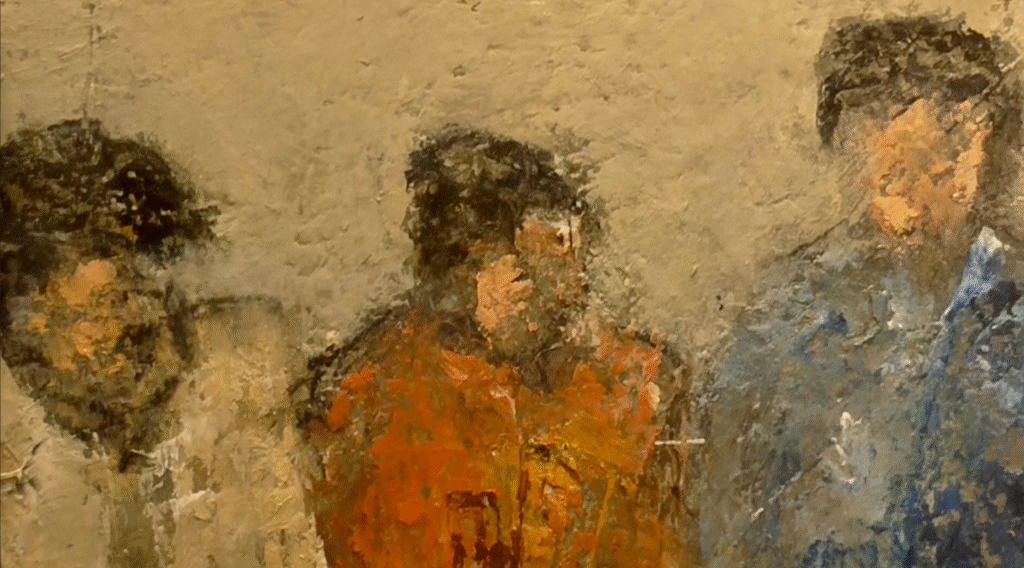
At a parallel moment, the Glencree initiative was also taking place. Between 2007 and 2012, a group of around 30 victims of ETA, the GAL, and the Basque Spanish Battalion met at the Glencree Centre in Ireland. This project brought together victims of different groups active during the armed conflict in restorative circles, in mutual recognition of their different experiences of suffering.
In the years since, developments have simultaneously expanded the types of restorative practices and methodologies in place and extended participation beyond direct victims and perpetrators of violence, to members of the wider Basque community. One such project, the MemoriaLab[7], invited Basque citizens to share their personal experiences of the impact of political violence, and to engage in the social construction of shared memory. Amongst the project’s creative approaches to facilitating dialogue was the inclusion of the ‘time spiral’ concept, where participants were encouraged to think of their experiences not only in a chronological timeline, but to conceptualise how events of the past, present and future are intricately intertwined and continue to shape each other[8].
These programmes have not been without their persistent challenges. In a culture shaped by the legacy of the Amnesty Law, restorative justice has, at times, been publicly conflated with the idea of impunity, and the misconception that restorative justice is a ‘softer’ approach to crime remains quite prevalent. This is, however, based on a profound misunderstanding. Restorative justice is not designed to impact the sentencing outcomes of offenders, but rather to emphasise accountability and the recognition of harm. It seeks to empower victims whilst naming and working to address the widespread societal impact of violent crime. In the Basque case, restorative practices have provided victims and communities with vital tools to confront the legacy of decades of violence.
Furthermore, where the concept of reconciliation remains a polarising notion in the Spanish political sphere, peace and coexistence projects (especially those based on restorative justice principles) often become the subject of debate in times of political volatility. This has created an ongoing need for projects that take a restorative justice approach to remain particularly discrete and localised so as to prioritise the social and emotional wellbeing of participants. Whilst there are some benefits to this—for example, most local mediators have intricate knowledge of the contexts in which they work—it also significantly restricts the scope of these programmes. Currently, participation in these projects can only be offered to a small proportion of Basque society.
The Coexistence Approach: Challenges and Lessons
Where responsibility for peacebuilding in the post-ceasefire era has ultimately been shouldered by Basque civil-society groups, organisations and individuals, these local coexistence processes have filled the vacuum left by the absence of a formal, state-led transitional justice framework. This has resulted in a locally sensitive landscape of peacebuilding in the Basque Country, designed and enacted by individuals with lived experience of the conflict, for members of their own communities. These conditions have underpinned the emergence of the Basque ‘coexistence’ approach to peacebuilding, that stands in contrast with a traditional ‘reconciliation’ approach. The coexistence approach does not aim for an elusive sense of ‘closure’. Instead, it treats conflict and disagreement as inherent aspects of life in a plural society, where the aim is not “towards the absence of conflict” but instead towards “knowledge of how to deal with it differently, in non-violent terms”[9]. Basque practitioners approach the task of peacebuilding as an ongoing, relational process that seeks to include, rather than silence or exclude, alternative narratives and viewpoints. Embedded within this peacebuilding approach, restorative justice provides a crucial mechanism for addressing harm through a dialogue-based practice, whilst providing opportunities for a plurality of viewpoints and experiences to coexist in the same space.
However, the dominant understanding of the period continues to negate a more nuanced representation of the armed conflict, where human rights violations were perpetrated by multiple groups. This narrative continues to prevent Basque society from being officially acknowledged as victims of the conflict, obscuring the need for more widespread and systematic coexistence projects that include an offer of restorative justice processes for those who wish to participate in them.
At the Autonomous government level, funding support remains vital for the continued operation and development of these programmes. Practitioners also call for more involvement from the Basque government in memorialisation mechanisms, and for increased emphasis on the importance of the ongoing restorative justice processes in empowering Basque communities to combat silence and deal with conflict through voluntary and inclusive dialogue.
The clear emphasis Basque practitioners place on narrative and recognition raises an important point of reflection. There is a risk, in the aftermath of political violence, of telling a single story. Yet there can never be a single story of a conflict. Conflicts are made up of countless pivotal moments, stories and narratives that might contradict each other, but can still hold vital truth and importance truth for those who have lived them. These stories do not simply disappear if they are not told; instead, they live on in our minds, as a part of our daily existence, shaping how we relate to those around us, and to ourselves. Where political violence knows only destruction and harm, it seeks to remove the space for participatory dialogue. In the Basque context, embedding restorative approaches in the coexistence landscape provides a vital opportunity to acknowledge a plurality of voices and experiences, in an ongoing approach to peacebuilding grounded in the principles of responsibility, participation, and respect.
Notes
[1] ‘Coexistence’ is used by Basque practitioners to refer to a set of processes that might otherwise be described as ‘reconciliation’. The concept of ‘coexistence’ also reflects a fundamentally different approach to peacebuilding, one that understands conflict and disagreement inherent aspects of life in a plural society.
[2] I use the term ‘coexistence landscape’ to describe the collection of grassroots-led, post-ceasefire peacebuilding practices in place in the Basque Country, including memorialisation, collective memory, and restorative justice mechanisms.
[3] ETA stands for Euskadi Ta Askatasuna meaning ‘Basque Country and Freedom’ in Basque. ETA was an armed Basque nationalist group that formed in 1959 and disarmed in 2017. Over this period, ETA’s attacks became increasingly indiscriminate and widespread. The armed conflict claimed almost 2000 lives, at least 840 of which are attributable to ETA.
[4] Personal communication, Irun, March 2025.
[5] Personal communication, Bilbao, April 2025.
[6] Personal communication, Donostia-San Sebastián, March 2025.
[7] MemoriaLab was coordinated jointly by The Bakeola Center for Mediation and Regulation of Conflict, The Gernika Gogoratuz Peace Research Centre, and the Gernika Peace Museum.
[8] See Alex Carrascosa, Restorative Artifacts: Inner-Stories and Time-Spiral (2020); and Iñigo Retolaza Eguren, “Memorialab: Dialogue, Memory and Social Healing in the Basque Country: A Methodological Note”(2021), accessed December 4, 2025, https://us.sagepub.com/sites/default/files/upm-assets/120849_book_item_120849.pdf
[9] Personal communication, June 2025.
All photos were taken by the author.
This article was originally published on the 5th of December 2025.